Hear the
planet.
Close your eyes. Press play on Earth.

You don’t need to see Earth to know it.
NASA’s views of our planet, turned into music. A DJ tells you exactly what you’re hearing.
Why we built it
The planet is changing. Millions of people have never been shown how.
- Warming oceans
- Retreating ice
- Shifting air
NASA shows it only in images. Andromeda lets you hear it.
How it works
First you learn the sounds. Then you hear the planet.
Pick your session
Oceans, ice, air or land. By voice, keyboard or touch.
Meet the sounds
The DJ plays each one alone first: “warm water sounds like this.”
Hear it move
The image plays left to right. When the data rises, so does the music.
What you see → What you hear
Nothing you hear is random.
- Color
- Chords
- Pixel density
- Rhythm
- Brightness
- Volume
- Shapes
- Instruments
Try it
Press play. This is what Andromeda sounds like.
Real NASA visualizations, with the music the app builds from them. Turn your sound on.
Stars
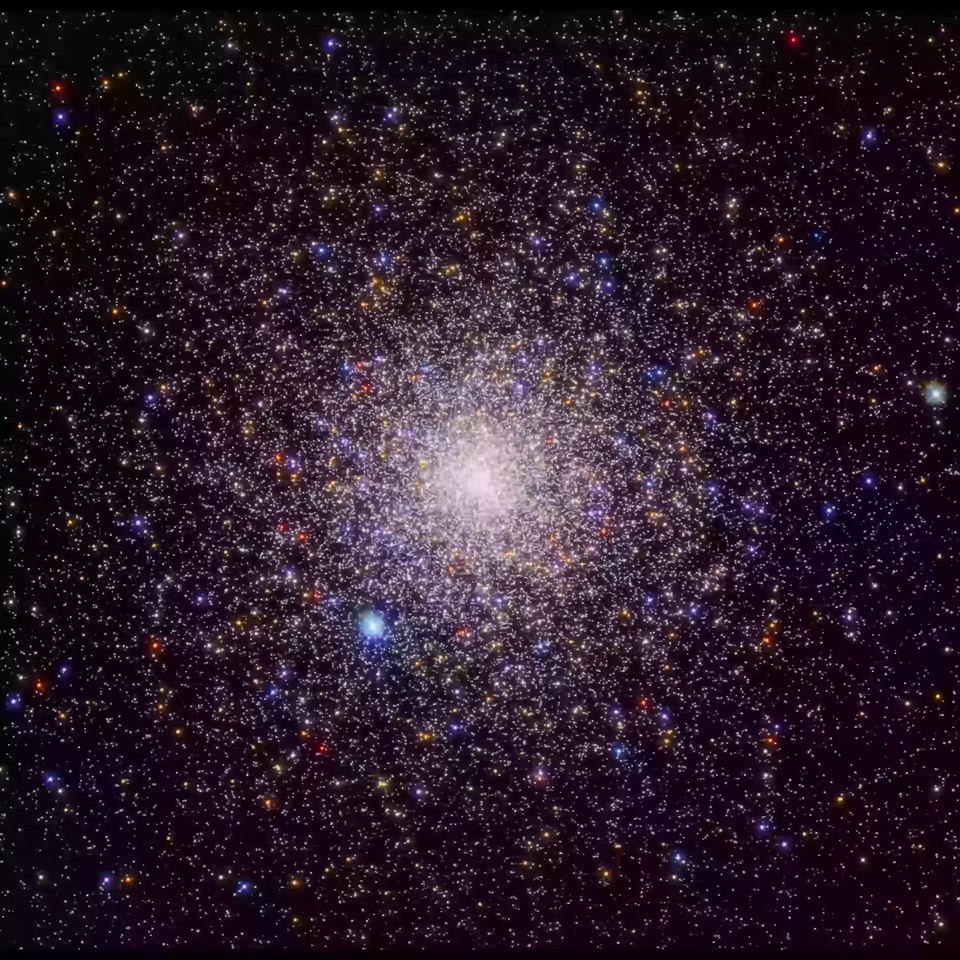
Caldwell 73
A ball of ancient stars, played the way NASA played Westerlund 2.
What you’re hearing
A line sweeps the image from left to right in 60 seconds. Higher in the image means a higher note. Each star is a plucked harp note, louder when the star is brighter. Hot blue stars ring as bells. The glowing core plays as bowed strings that swell with the light. Left and right in the image are left and right in your ears. Every instrument is a real recording.
What you’re seeing
Caldwell 73, also called NGC 1851, is a globular cluster about 39,000 light-years away in the constellation Columba. Hundreds of thousands of very old stars are packed into one ball. The center is so crowded that it glows as a single bright haze, and the stars thin out toward the edges.
Credits
Image: NASA, ESA and G. Piotto (Hubble). Sound: Andromeda, with the method of NASA's Westerlund 2 sonification (Chandra, SYSTEM Sounds).
See it in action
Andromeda App The planet, in your pocket.
Thirty seconds inside the app: a track plays, the data turns into sound, and help is always one tap away.
Now playing
Every track says what it is and which NASA view it comes from.
“What am I hearing?”
One tap and the DJ explains the sound playing right now.
Repeat legend
Hear each sound alone again, whenever you need a reminder.
The albums
Four sides of one planet. Zero screens required.
- Oceans
Currents turning, warm water spreading.
- Ice
Sea ice growing, then pulling back.
- Air
What moves through the sky above you.
- Land
The ground changing with the seasons.
Designed blind-first
Not adapted for blind listeners. Built for them.
One test for every decision: does it work with your eyes closed?
A guide, not a manual
The DJ leads. No hunting for buttons.
Every sound explained
Ask “what am I hearing?” anytime.
Your voice, your choice
Pick the narrator you follow best.
Say it and it plays
“Play sea ice,” from any screen.
Touch the data
Hear what’s under your finger.
Screen reader ready
Every control announces itself.